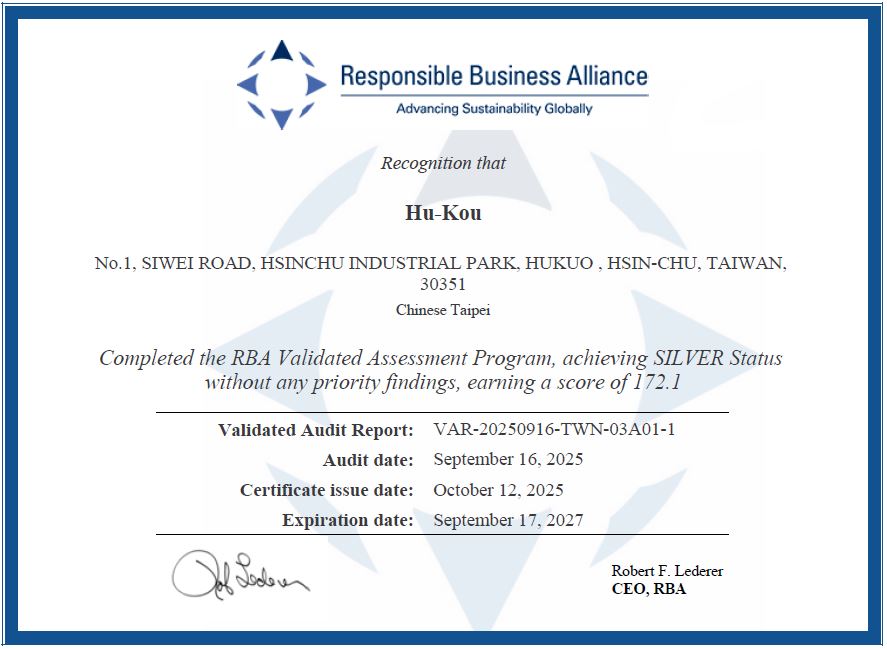
The Company has adopted the Responsible Business Alliance (RBA) Code of Conduct as the foundational framework for its human rights policy and related management systems. The RBA Code of Conduct aims to establish standards to ensure a safe working environment throughout the supply chain, promote responsible and ethical business practices, and respect human rights and environmental protection.
The provisions of the RBA Code of Conduct are derived from and respect internationally recognized standards including:
- OECD Guidelines for Multinational Enterprises
- UN Guiding Principles on Business and Human Rights
- ILO Declaration on Fundamental Principles and Rights at Work
- ILO Fundamental Conventions
- UN Universal Declaration of Human Rights
In terms of implementation, the Company integrates human rights considerations into its internal policies, procedures, and management processes. The scope of application covers all employees and relevant stakeholders. Through measures such as human rights–related education and training, grievance and reporting mechanisms, risk identification, and continuous improvement, the Company is committed to preventing discrimination, prohibiting forced labor and child labor, respecting freedom of association, and safeguarding employee dignity and workplace safety, thereby establishing human rights as a key foundation of its operations and corporate governance.
RBA (Responsible Business Alliance) Policy
- Comply with labor laws and regulations and prohibit from hiring child labor, forced labor, discriminating. In addition, respect employees’ freedom of establishing organizing associations and continue to improve employees’ rights.
- Provide a healthy and safe workplace complying with legal requirements.
- Pay attention to environment safety and health, complying with environmental factors related to the company law, and following the requirements of the relevant environmental regulations.
- Comply with the highest standards of ethical requirements, focusing on business integrity to prohibit any and all forms of bribery and also respecting and protecting rights of intellectual property.
Conflict Minerals Policy
In order to fulfill our corporate social responsibility and ethical sourcing principles, Sigurd is committed to actively investigating and avoiding the use of "conflict minerals" that come from conflict areas and contribute to armed conflicts or human rights violations in the products. These conflict minerals include, but are not limited to, Tin, Tantalum, Tungsten, Gold, Cobalt and Mica.
Our company policy is as follows:
-
Transparency of Supply Chain
Suppliers are required to provide information regarding the source of conflict minerals and cooperate in conducting reasonable due diligence. -
Compliance with International Standards
Our company supports the OECD Due Diligence Guidance for Responsible Supply Chains of Minerals from Conflict-Affected and High-Risk Areas.
-
Supplier Responsibility
Suppliers shall commit to not use conflict minerals originating from the Democratic Republic of the Congo (DRC) and its neighboring countries and shall continuously improve their supply chain management.
-
Risk Management and Improvement
For suppliers who fail to comply with this policy or pose a risk of using conflict minerals, we will take necessary corrective actions and may terminate business relationships if necessary.
RBA Certification